Identity Politics
In recent years, “identity politics” has become a deeply contested phrase in church life. For some, it signals justice, visibility, and inclusion. For others, it represents division, ideology, and a threat to Christian unity. But what if identity politics—carefully understood and theologically disciplined—could actually help the Church become more faithful, especially when it comes to neurodiversity?
One of the most helpful biblical lenses on identity politics comes from Acts 6:1–7. In that passage, Greek-speaking Jewish widows are being overlooked in the daily distribution of food. Kate Coleman has pointed out several striking features of this episode. The group suffering discrimination is defined intersectionally: they are widows, women, Jewish, and Hellenistic. The problem is raised by people closely connected to those who are suffering, not by the powerful. And crucially, the apostles do not dismiss the complaint. Instead, they listen, name the injustice publicly, and propose a concrete solution that redistributes power. The seven appointed to address the problem appear to represent the marginalised group rather than the existing leadership.
That, at its best, is identity politics: not performative gestures, but attentive listening, honest naming of injustice, and structural change. When framed this way, it is hard to see why evangelicals should object in principle.
This matters particularly for autistic people. Most autistic people prefer identity-first language, and see autism as part of their identity, like nationality or ethnicity. Autistic people also face profound structural disadvantage in our world. Life expectancy is significantly lower than average, and rates of suicide are dramatically higher. Employment figures tell a similar story: only around 30% of working-age autistic adults in the UK are in work, compared with 80% of non-disabled people. These disparities are rarely the result of deliberate cruelty. More often they arise because social systems are designed around unspoken assumptions about communication, behaviour, and “normality”.
Churches are not exempt. While most church leaders believe their congregations are welcoming to people with disabilities, autistic children are less likely to attend church than any other group, and their parents are less likely to feel supported. The gap between intention and experience is stark.



So why the common evangelical resistance to identity politics? Theologically, three concerns often surface. First, some argue that our primary identity should be “in Christ”. That is true—but it does not mean other identities are unreal or unusable. Paul speaks freely of Jews and Gentiles even as he insists they are one in Christ (Galatians 3:28). The problem is not naming difference; it is allowing difference to become ultimate. Identity politics must never replace our identity in Christ—but neither should it be dismissed as idolatrous simply for naming reality.
Second, critics worry that identity politics reduces complex situations to simplistic oppressor-and-oppressed narratives. This critique is often valid. Human brokenness is deep and shared, and injustice is rarely morally tidy. But a tool’s limitations do not make it useless. We use simplified models all the time in science; the wisdom and skill lies in knowing when and how to use them, and in holding them alongside other theological and pastoral tools.
The third concern is more subtle. Practical theology is often framed as beginning with “experience”, but that risks allowing the way an experience is initially framed to control the entire process of reflection. Faithful theology must listen carefully to experience, but also interrogate it in the light of the gospel story of creation, fall, redemption, and new creation.
At the heart of current church debates lies a deeper problem: the lack of a shared theological framework for identity. When identity politics is used without theological clarity, it becomes polarising. Conservatives then reject not only contested moral claims but also the identities of those making them. In the process, identity politics becomes discredited, even in areas like neurodiversity, where it could genuinely help the Church.

This is a shortened and simplified version of my academic paper Identity Politics and the Search for a Neurodiverse Church, published in Crucible (Jan 2026)
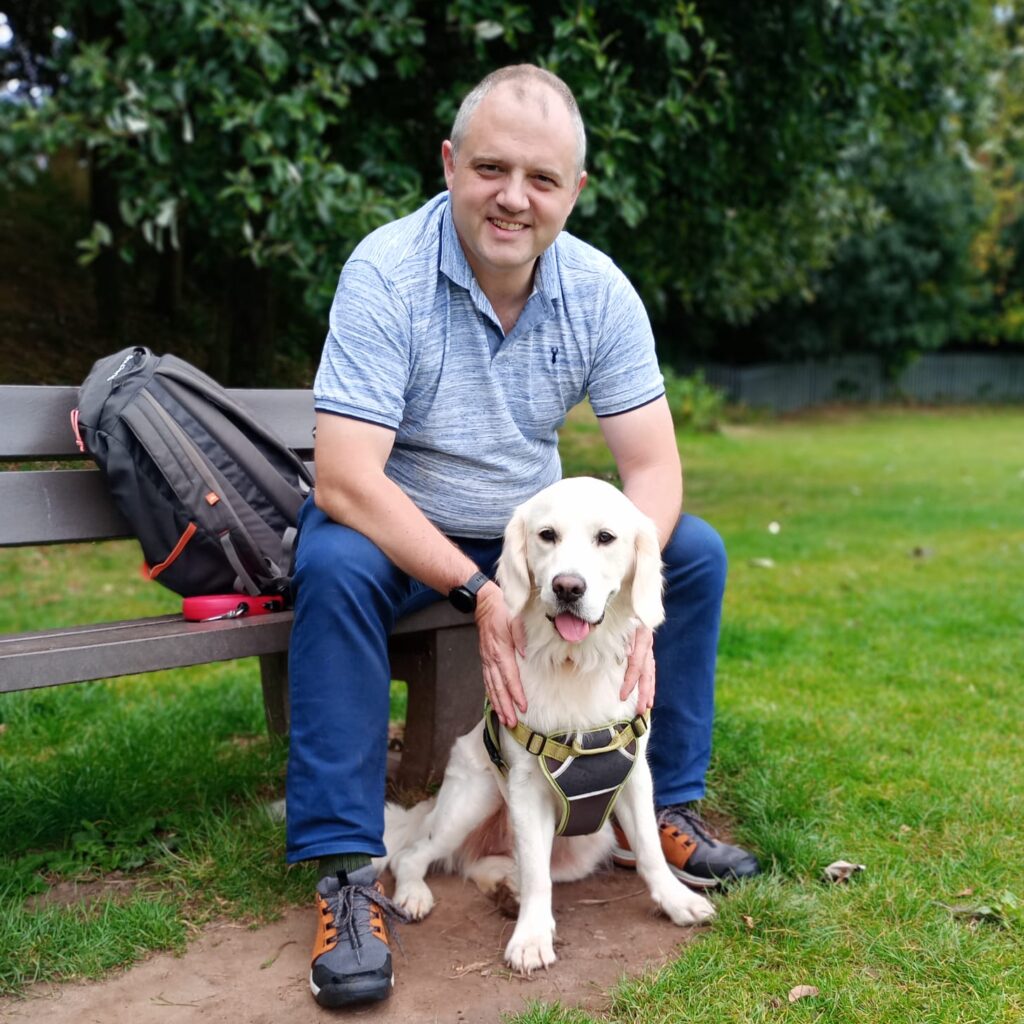
John Allister
John Allister is the vicar of St Jude’s Church in Nottingham, England.
He is autistic, and has degrees in Theology and Experimental & Theoretical Physics.