
Job Interviews
Job interviews are notoriously bad for autistic candidates. A UK government review in 2024 concluded that:
Research suggests interviews may not be a fair or necessary way to recruit autistic candidates.
The Buckland Review, 5.11
The main reason for this is that job interviews usually assess people’s neurotypical social skills more than they assess ability to do the job. We all know someone who is charming and good at blagging, who is likely to do well at interviews; autism is the opposite of that. In fact, there is a wider phenomenon that lots of people believe they are good at “reading” strangers who they meet; the data suggests that isn’t true. There is also a significant minority of people who are hard to read accurately at all; this includes most autistic people. Malcolm Gladwell wrote a wonderful book about this called Talking to Strangers.
I think interviews are one of the main reasons that the unemployment rate for autistic people in the UK is a whopping 70%. Even for autistic graduates, only 36% find full-time work within 15 months of graduating.
In one recent story, an autistic man had been volunteering stacking shelves at a local supermarket for 4 years, and doing a good job of it. He applied for a paid role doing the same thing, and was rejected. There was an outcry, and eventually they offered him the job. I am willing to bet the rejection came after an interview.
There is an increasing standardisation of appointment processes, and it is standardising around the job interview, which is known to discriminate against autistic people. I struggle to reconcile this with employers’ legal obligations under the Equality Act (2010).
I think I know how clergy employment works in the UK fairly well; I have been employed in the sector for 16 years, have been interviewed for several jobs during that time, as well as being part of interview panels for people both applying for ordination training and applying for clergy posts after training. So I have written some guidelines to help people seeking to employ clergy.
Here they are, as a PDF. Feel free to use them, forward them to the people responsible for interviews, etc. And let me know if you come up with any improvements!
Here’s the TL;DR action points from the end of the document.
- Standard pathways bad; flexibility good. Don’t assume that everyone else works the way that you do.
- It is the responsibility of the chair of the panel to ensure that the selection process is non-discriminatory. They should have done training in avoiding subconscious bias that includes discussion of autism.
- At the application stage, ask the autistic candidate what a fair interview process would look like.
- Ask the candidates to help plan the parish visit day. What would they value? What would they avoid?
- Let candidates opt out of bits of the parish visit day without negative consequences.
- Make a quiet space available for the candidates to recover between events; many candidates might prefer to go for a walk outside, whatever the weather.
- Interviews usually give the worst impression of autistic people. If you interview, make sure that the interview is assessing what it needs to be assessing, not whether the person can blag convincingly or do neurotypical extroverted sociability.
- If you interview, do a sensory audit of the interview environment beforehand.
- Give interview questions out beforehand in writing.
- Consider requesting portfolios of work (including video sermons / service leading, etc.) to see the candidates in action rather than just listen to them talk about what they do.
- Offer candidates the opportunity to comment on whether the process was fair.
- Remember why this matters: diversity, including neurodiversity, is a key feature of the Body of Christ. If we exclude autistic Christians, we exclude Jesus (Matt 25:40).

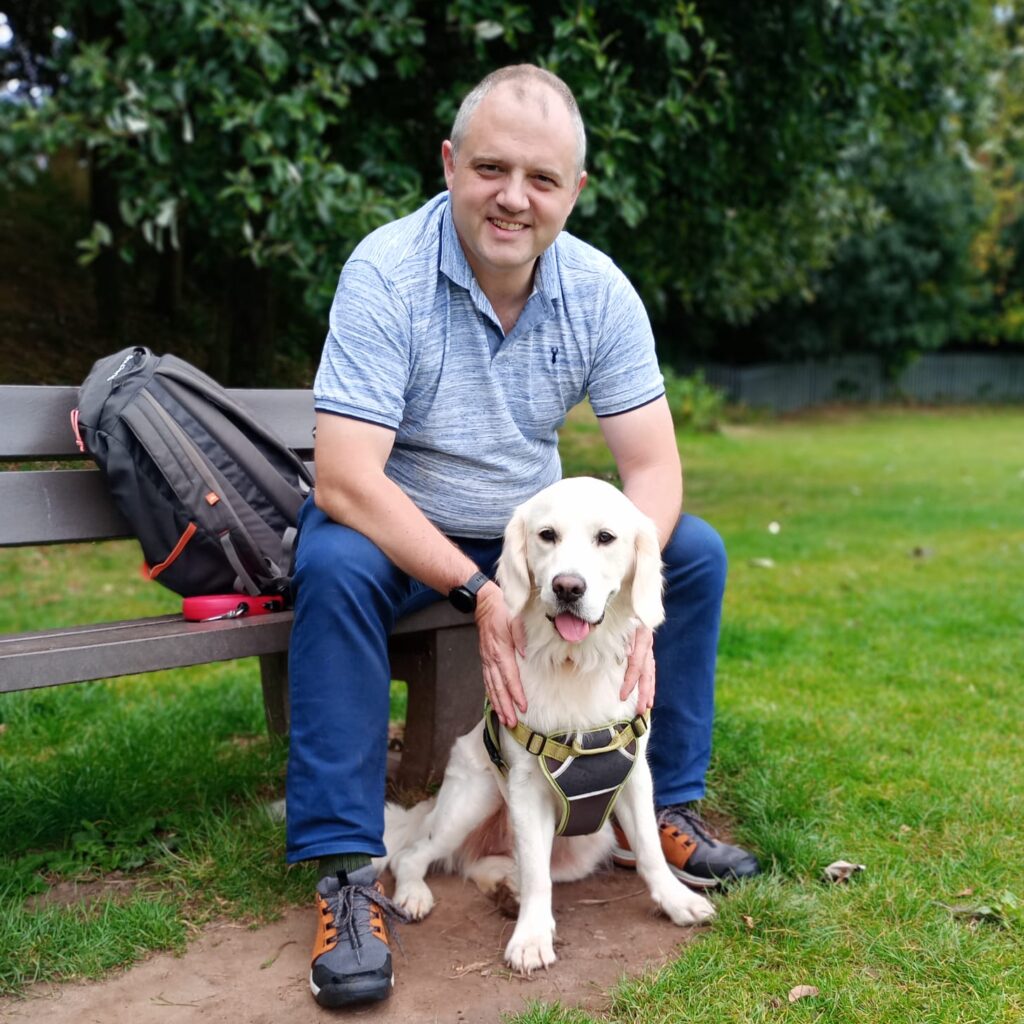
John Allister
John Allister is the vicar of St Jude’s Church in Nottingham, England.
He is autistic, and has degrees in Theology and Experimental & Theoretical Physics.