Why is Neurodivergence increasing?
It seems that neurodivergence is increasing in the general population. The rate of diagnosis of ADHD, Autism and Dyslexia continue to rise, especially among the young. What is driving this?
I think there’s a fairly clear answer that most people miss most of the time. But first, it will help to clear up some terminology with a couple of quick definitions:
Neurodivergent (of a person) – having a brain that works substantially differently from most people’s brains; having a different neurotype.
Neurodiverse (of a group) – containing people with a range of different neurotypes
I think there are five possible explanations, and three of them are partly true, but one of them is majorly true.
Explanation 1 – People Are Changing
Maybe this increase in diagnosis is because people are getting more autistic. Is there something in the drinking water, or an infectious disease or medication that is causing it? Possibly, but it’s worth noting that there is as yet no scientific evidence for an environmental cause for autism. There is some evidence for genetic causes, but it’s clearly a complex phenomenon that isn’t as simple as whether someone has red hair (obviously genetic) or lead poisoning (obviously environmental).
Explanation 2 – More People are Faking It
The second possible explanation is that more people are faking it to try to get benefits, permissions, special treatment, etc. And I know this can partly be the case among teenagers and children in particular, though it’s usually not intentional, and what is happening actually fits better with one of the later explanations.
Explanation 3 – Generation Snowflake
The third explanation is that in some important ways young people are not being raised as well as their predecessors were. This doesn’t have to be a nostalgic argument – there have clearly been massive improvements in terms of reducing physical abuse of children, for instance. But in some aspects, many children now aren’t taught some of the skills that they need, especially in terms of paying attention. What if a fair bit of the ADHD among young people in our society is as a result of people having too much access to phones, which reduces their attention span? Well, maybe, but it doesn’t explain the fact that autism is rising too.



Explanation 4 – Massive Levels of Past Neurodivergence
What if the current levels of neurodivergence have always been there? What if it has just been going undiagnosed for centuries? And it’s certainly possible to look at people of the past like Isaac Newton or Thomas Aquinas and say that while we can’t actually diagnose them, they look an awful lot like autistic people, and someone with their sort of profile today should probably look at whether they could get a diagnosis.
But the problem with this explanation is that if such a high proportion of the population had something like ADHD or autism, surely it would have been noticed before the 1970s.
Explanation 5 – Culture Shift
But none of that sounds like the most obvious explanation. What if people are broadly the same as we always have been, albeit with some slight changes in technology? But what if the way we use the word “neurodivergent” doesn’t really mean what I wrote above? What if it means “having a brain that works substantially differently from most people’s brains in a way that causes difficulties”? After all, that’s part of the diagnostic criteria…
In other words, the clinical definition of autism and ADHD isn’t just down to what the individual is like – it’s down to how well-supported and included they are in society. If society was properly inclusive, then very few people would be disrupted enough to meet the criteria. But it isn’t, and it’s getting worse.
What if the main body of society has got significantly worse at including variety? Then the proportion of people who are clinically neurodivergent would be increasing, without people themselves changing, and I think that’s what we see.
There is of course a meme which says it well.

Absolutely – the grandfather may well have been autistic by today’s standards, but the difference is that he was a valued part of society. He was in a society where he could be happily married, work in a productive job, enjoy his stamps without being bullied and generally go about his autistic life in peace. That’s much less the case now.
Let’s just pick a couple of examples to show some of the ways that society is getting worse at including people, which help to explain the rise in neurodivergence.

Example 1 – Open Plan Spaces
Open plan spaces are horrible for this autistic person, because I’m rubbish at filtering out background noise.
I used to quite enjoy eating in restaurant booths – I could hear what other people at the table were saying because the booth blocked out the noise from other tables. But I couldn’t even name a restaurant with booths any more – they have fallen out of fashion and been replaced by big open plan spaces, which means I can’t hear anything. The same is true in house design, office layouts, libraries and so on. Spaces that used to be fairly well designed to stop noise are increasingly unfriendly to people with sensory processing difficulties.
Example 2 – CAREER ROUTES
Career routes are increasingly standardised, which is bad for neurodivergent people, because the routes aren’t standardised with them in mind.
For example, in my parents’ generation (now retired), it was perfectly possible to get a job in a bank without much in the way of qualifications, and to work your way up if you were good at it. Now they’d expect people to have passed lots of exams (which makes it much harder for folk with ADHD) and get through spoken interviews (which makes it much harder for autistic people). Neither of those are necessarily anything to do with the skills needed for a job. Exams are testing ability to write about the subject (or solve problems) multiplied by ability to focus hard on a written exam paper, and interviews test ability at talking off the cuff about the subject multiplied by some kind of social confidence.
And so people who aren’t good at both focusing on a written exam paper and speaking off the cuff find it harder to get a job, even if the job is nothing to do with either.

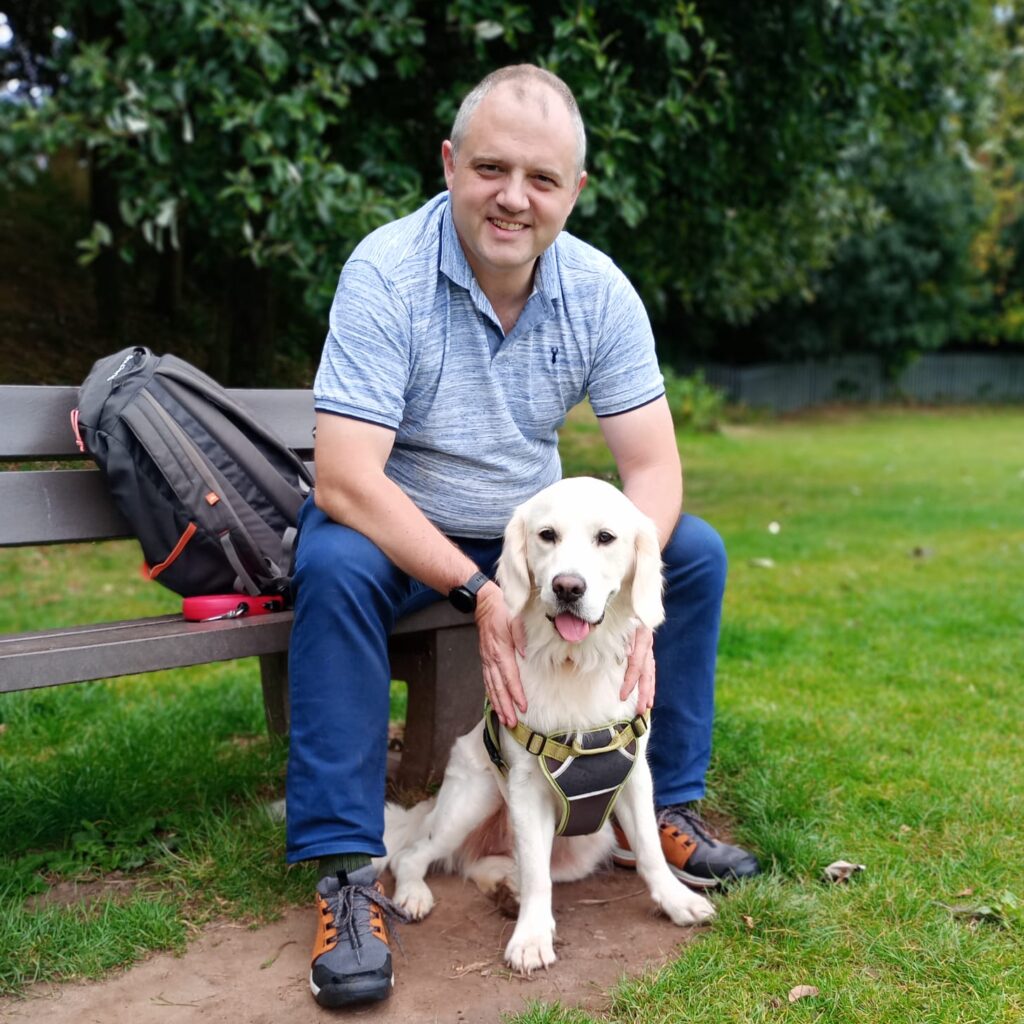
John Allister
John Allister is the vicar of St Jude’s Church in Nottingham, England.
He is autistic, and has degrees in Theology and Experimental & Theoretical Physics.